For some people, the fear shows up as a tight chest on the highway on-ramp. For others, it’s a detour of twenty extra minutes to avoid a bridge, or asking a spouse to drive “just this once” for the third year in a row. Driving phobia, sometimes called driving anxiety or amaxophobia, is one of the most common fears I treat, and one of the most responsive to treatment. In this post, I explain what driving phobia is, why it tends to grow over time, and how Cognitive-Behavioral Therapy (CBT) and Exposure and Response Prevention (ERP) help people get back on the road.
What Is Driving Phobia?
Driving phobia is an intense, persistent fear of driving, or of specific driving situations, that is out of proportion to the actual risk and that leads to avoidance or significant distress. Clinically, it usually falls under the category of a specific phobia, though it often overlaps with panic, trauma, or generalized anxiety.
Driving phobia rarely looks the same from one person to the next. Common versions include fear of:
- Highway driving, merging, or changing lanes at speed
- Bridges, tunnels, and overpasses
- Being “trapped” in traffic or unable to pull over
- Driving alone, at night, or in bad weather
- Losing control of the car, or of oneself, while driving
- Causing an accident or hurting someone
- Driving after a crash, whether as the driver or a passenger
Some of my clients have never driven comfortably. Others drove for decades before a single frightening event, such as a near-miss, a panic attack on the interstate, or a collision, changed everything.
Why Driving Fear Tends to Get Worse
The engine of nearly every phobia is avoidance. When you skip the highway and your anxiety drops, your brain learns a powerful (and inaccurate) lesson: the highway was dangerous, and avoiding it kept me safe. The next time, the urge to avoid is stronger. Over months and years, the “no-go” zone often expands, from highways to busy roads, from busy roads to unfamiliar routes, and sometimes to driving altogether.
Avoidance isn’t the only culprit. People with driving anxiety often develop safety behaviors that feel protective but quietly keep the fear alive:
- Driving only with a “safe person” in the car
- Gripping the wheel, staying in the right lane, or driving well below the speed limit
- Mapping routes to avoid every bridge or left turn
- Keeping water, medication, or a phone call ready “just in case”
- Constant mental checking of heart rate, breathing, or dizziness
These behaviors are understandable, but they prevent the brain from ever learning that the feared outcome is unlikely and that the anxiety is survivable. That’s precisely where CBT and ERP come in.
The core insight: Driving phobia is maintained less by the original frightening event than by what happens afterward: avoidance, safety behaviors, and catastrophic predictions that never get tested. Treatment targets all three.
Driving Phobia, Panic Attacks, and Trauma
Part of my assessment is figuring out what the fear is really about, because that shapes the treatment plan.
Fear of panic while driving. Many people aren’t primarily afraid of crashing. They’re afraid of having a panic attack behind the wheel and being unable to escape. In these cases, the work draws heavily on panic attack treatment, including exposure to the physical sensations of anxiety themselves.
Fear after a motor vehicle accident. When driving anxiety follows a crash and comes with intrusive memories, nightmares, or feeling on edge, trauma may be part of the picture. Trauma-focused approaches such as CBT for trauma can be integrated with gradual return-to-driving work.
Fear of harming someone. Some people are tormented by thoughts like “What if I hit a pedestrian and didn’t notice?”, followed by circling the block or checking the news for hit-and-run reports. This pattern often reflects obsessive-compulsive features and responds especially well to ERP, which I describe in more detail in my post on CBT for OCD.
How CBT Treats Driving Phobia
Cognitive-Behavioral Therapy is the first-line, evidence-based treatment for specific phobias, including fear of driving. In my practice, CBT for driving anxiety typically includes four components.
1. Understanding the Fear Cycle
We map your personal cycle: the triggers, the thoughts, the body sensations, and the avoidance or safety behaviors that follow. Seeing the pattern clearly is often a relief in itself, because it makes the fear feel less mysterious and more workable.
2. Identifying and Testing Catastrophic Thoughts
Driving fear usually runs on predictions: “If I get on the highway, I’ll panic and crash.” “If I’m stuck on the bridge, I’ll lose control.” In CBT, we don’t just argue with these thoughts. We treat them as hypotheses to be tested, then design experiments to test them.
3. Building Anxiety-Management Skills
Slow breathing, grounding, and attention-shifting skills can help, but I teach them carefully. The goal is not to eliminate anxiety before driving; it’s to be able to drive with anxiety present. Skills that turn into new safety behaviors can backfire. Many clients also benefit from acceptance-based strategies drawn from mindfulness-based cognitive therapy, which help them notice anxious sensations without fighting them.
4. Graduated Exposure
This is where most of the change happens, and it’s the heart of the ERP approach described below.
How ERP and Exposure Therapy Treat Driving Phobia
Exposure and Response Prevention (ERP) means facing feared situations in a planned, gradual way (exposure) while dropping the avoidance and safety behaviors that keep the fear going (response prevention). Although ERP is best known as a treatment for OCD, the same principles are the backbone of exposure therapy for anxiety and phobias of all kinds.
We start by building an exposure hierarchy, a ladder of driving situations ranked by how much distress each one causes on a 0–100 scale (called SUDS, or Subjective Units of Distress). Here’s a sample hierarchy for someone afraid of highway driving:
| Step | Exposure Task | Expected SUDS |
|---|---|---|
| 1 | Watching dashcam videos of highway driving | 20 |
| 2 | Sitting in the parked car with the engine running for 10 minutes | 25 |
| 3 | Driving around a quiet neighborhood alone | 35 |
| 4 | Driving on a busier local road at mid-day | 45 |
| 5 | Riding as a passenger on the highway, then pulling over and switching seats on a side road | 55 |
| 6 | Driving one highway exit with a support person | 65 |
| 7 | Driving one highway exit alone | 75 |
| 8 | Driving three exits alone, in the middle lane | 85 |
| 9 | Highway driving at rush hour, including merging and passing | 95 |
Exposure can take several forms, and I often combine them:
- Imaginal exposure: vividly rehearsing feared driving scenarios in session, which is especially useful early in treatment or when the fear centers on a past accident
- Interoceptive exposure: deliberately bringing on the physical sensations of anxiety (a racing heart, lightheadedness) so they lose their power, which is key when the fear is of panicking while driving
- In vivo exposure: real-world driving practice, step by step up the hierarchy, repeated until the fear meaningfully decreases
The response prevention piece is what makes this approach so effective. As clients move up the ladder, we gradually retire the safety behaviors: driving without the “safe person,” changing lanes instead of staying pinned to the right, taking the direct route instead of the bridge-free detour. Each time you drive without the crutch and nothing terrible happens, your brain updates its threat map.
Importantly, exposure is always collaborative and always at a pace that is challenging but manageable. You’re never forced onto a highway you’re not ready for.
A note on safety: Exposure work is designed around situations that are realistically safe. If you haven’t driven in years, we may build in refresher lessons with a driving instructor. And if we do any real-time coaching by phone or video, it happens before you pull out or after you’ve safely parked, never while you’re driving.
A Case Example
The following is a composite example, with details changed to protect confidentiality.
“Dana,” a 42-year-old project manager, had a panic attack on a busy interstate five years before she came to see me. She pulled onto the shoulder, shaking, and called her husband to come get her. Afterward, she stopped driving on highways. Within two years, she was also avoiding major roads, and her 15-minute commute had stretched to 40 minutes on back streets.
Our assessment showed that Dana’s core fear wasn’t crashing. It was panicking and “losing it” with no way out. We began with psychoeducation about panic, then moved to interoceptive exposure: spinning in a chair and breathing through a straw in session to bring on the dizziness and breathlessness she dreaded. Once those sensations felt less threatening, we built a driving hierarchy and she began practicing between sessions, starting with local roads and progressing to single highway exits.
The hardest step was letting go of her safety behaviors: keeping her husband on speakerphone and planning every possible exit in advance. By our fourteenth session, Dana was driving her direct highway commute alone. She still felt a flicker of nervousness sometimes, but it no longer decided where she could go.
Can Driving Phobia Be Treated Online?
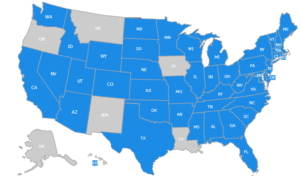
Yes. Much of the core work, including assessment, cognitive restructuring, imaginal and interoceptive exposure, and hierarchy planning, translates well to telehealth, which I discuss more broadly in my post on online therapy approaches and outcomes. Real-world driving practice happens between sessions, and we review each exposure together. Through PSYPACT, I can provide telehealth services to clients in 44 states, and I also see clients in person. You can learn more on my locations page.
Other Treatment Options
CBT and exposure-based therapy have the strongest research support for phobias, but they aren’t the only tools. Virtual reality exposure, acceptance and commitment therapy, and trauma-focused approaches can all play a role depending on the person. If you’d like a broader comparison, see my overview of the best types of therapy for anxiety and my guide to therapy techniques for depression, anxiety, and phobias. I describe how I combine these approaches into an individualized plan on my therapy approach page.
Frequently Asked Questions About Driving Phobia
What is driving phobia?
Driving phobia, also called driving anxiety or amaxophobia, is an intense and persistent fear of driving or of specific driving situations, such as highways, bridges, merging, or heavy traffic. The fear is out of proportion to the actual danger and usually leads to avoidance, such as taking long detours, refusing to drive alone, or giving up driving entirely. It is typically classified as a specific phobia, though it often overlaps with panic disorder, post-traumatic stress after an accident, or generalized anxiety. The good news is that it responds very well to structured, evidence-based treatment.
What is the most effective treatment for fear of driving?
Cognitive-Behavioral Therapy (CBT) with graduated exposure is the most effective, best-researched treatment for driving phobia. CBT helps you identify and test the catastrophic predictions driving the fear, while exposure lets you face driving situations step by step, from least to most difficult. Response prevention, which means gradually dropping safety behaviors like driving only with a companion, is what helps the gains last. Treatment is collaborative and paced so that each step feels challenging but manageable, never overwhelming.
How long does it take to overcome driving anxiety?
It varies with how long the fear has been present, how much driving you currently avoid, and whether panic or trauma is part of the picture. Many people notice meaningful progress within 8 to 16 sessions of CBT and exposure therapy, especially when they practice driving consistently between sessions. People who have avoided driving for many years, or whose fear began with a serious accident, may need more time. What matters most is steady practice, not speed. Each successful drive builds on the last.
Is driving phobia the same as agoraphobia or panic disorder?
Not always, but they often overlap. Some people fear driving itself, such as crashing or losing control of the car. Others are primarily afraid of having a panic attack while driving and being unable to escape, which is more characteristic of panic disorder or agoraphobia. Still others develop driving fear after a crash, which can reflect post-traumatic stress. A careful assessment clarifies what the fear is really about, and that determines whether treatment emphasizes panic-focused exposure, trauma-focused work, or a standard phobia protocol.
Can driving phobia be treated with online therapy?
Yes. Assessment, cognitive restructuring, imaginal exposure, interoceptive exposure, and hierarchy planning all work well by telehealth. Real-world driving practice happens between sessions, and we review each drive together to adjust the plan. Any real-time coaching happens before you start the car or after you’ve safely parked, never while you are driving. Through PSYPACT, I provide telehealth to clients in 44 states, so you can get specialized help without first having to drive to an office.
Ready to Get Back Behind the Wheel?
Driving fear can shrink your world one avoided road at a time, but it doesn’t have to stay that way. If you’re ready to explore treatment, I offer a free consultation to talk through what you’re experiencing and whether CBT and exposure-based therapy are a good fit.
Schedule a Free ConsultationRelated reading: Therapy for Phobias · ERP: Exposure and Response Prevention Therapy · Cognitive-Behavioral Therapy (CBT) · Exposure Therapy for Anxiety · Panic Attack Treatment


 Alan Jacobson, Psy.D., MBA, is a licensed clinical psychologist and Director of the Foresight Psychological Institute.