Practical, evidence-based support for long-distance couples and long-distance marriages — delivered virtually, nationwide.
Long-distance relationships get a bad reputation they often don’t deserve. In my practice, I work with couples who are dating long-distance, engaged long-distance, and married long-distance — and what I see, over and over, is that distance itself rarely breaks a relationship. What breaks relationships is unmanaged uncertainty: no shared plan, no consistent communication rhythm, and no space to work through the specific stresses that come with loving someone you can’t reach out and touch. Long-distance relationship counseling gives couples exactly that structure, so the relationship doesn’t just survive the distance — it can genuinely thrive during it.
This page covers how I help couples manage and fully enjoy long-distance relationships, including a dedicated look at long-distance marriage, and where to go next if a specific issue — like fear of intimacy or deciding whether to close the distance — is at the center of what you’re working through.
Why Long-Distance Relationships Are Harder — And Why They Can Still Work
Long-distance couples face a specific set of pressures that geographically close couples don’t: fewer nonverbal cues, no shared physical routines, higher stakes attached to the time you do get together, and an open question about the future hanging over the relationship. It’s reasonable that these things create strain. What’s less well known is that research on long-distance relationships doesn’t support the idea that distance predicts failure. Recent work on long-distance couples, including a 2026 study in the Journal of Social and Personal Relationships, has found real social and relational benefits associated with managing a relationship across distance, particularly around communication quality and appreciation for time together.
The Gottman Institute has written similarly: long-distance relationships can work as well as, or better than, geographically close ones when couples build intentional habits around communication, trust, and shared goals. The distance isn’t the deciding factor. How you manage it is.
Common Challenges I Help Long-Distance Couples Work Through
- Trust without daily visibility. Learning to trust a partner you can’t observe day-to-day, without that trust curdling into anxiety or surveillance behavior.
- Communication overload or communication avoidance. Some long-distance couples talk constantly and still feel disconnected; others go quiet to avoid conflict they can’t easily repair over a screen.
- Ambiguity about the future. Not knowing when, or whether, the distance will end — and how to keep investing in a relationship with an open-ended timeline.
- Intimacy and physical connection. Sustaining emotional and physical closeness with limited in-person time, and navigating the adjustment period during visits and reunions.
- Loneliness and resentment. Especially when one partner’s daily life (a new city, a demanding job, a deployment) is largely invisible to the other.
- Decision fatigue. Constantly re-litigating whether, when, and how to close the distance, which can wear down even a strong relationship.
How I Help Long-Distance Couples Manage and Enjoy the Relationship
My approach to long-distance relationship therapy draws on the same evidence-based couples therapy modalities I use with geographically close couples — Emotionally Focused Therapy (EFT), Integrative Behavioral Couples Therapy, and Relational Life Therapy — adapted specifically for the realities of distance. In sessions, we typically work on:
- Building a communication rhythm that feels sustainable rather than exhausting, instead of defaulting to constant contact or long silences
- Naming and working through the underlying attachment fears that distance tends to amplify — jealousy, reassurance-seeking, withdrawal
- Creating a realistic, mutually agreed-upon plan (or planning process) for the future of the relationship, so uncertainty has a container
- Rebuilding intimacy and connection during visits, without the pressure of trying to “fit a whole relationship” into a few days
- Addressing conflict patterns that get worse over video or text, where tone and nuance are easy to lose
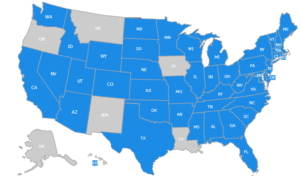
Because long-distance couples are, by definition, spread across cities, states, or countries, I offer virtual couples therapy as a primary format — not a workaround. With PSYPACT authority covering 44 states and individual licensure in Massachusetts, California, New Hampshire, and New York, I can see both partners together on the same call even when they’re logging in from two different time zones.
Managing a Long-Distance Marriage
Married couples living apart face a different set of demands than dating couples, because a marriage already carries shared finances, shared decisions, and often children or aging parents — all of which have to be coordinated across a distance. I regularly work with spouses navigating:
- Military deployment or relocation, where one spouse’s schedule and availability are largely outside either partner’s control
- Work relocation, including situations where one spouse has moved for a job while the other stays behind for children’s schooling, a lease, or their own career
- Immigration and visa timelines, where the length of separation is genuinely unknown
- Caregiving obligations, such as one spouse relocating temporarily to care for an aging or ill parent
In marriage counseling adapted for long-distance couples, we focus on keeping the marriage itself — not just the logistics of it — strong: maintaining emotional and physical intimacy without regular contact, making joint decisions when one partner has more day-to-day information than the other, co-parenting across two households when children are involved, and managing the isolation that can build in a marriage even when the underlying relationship is solid. The goal isn’t simply getting through the separation. It’s coming out the other side of it as close, or closer, than you started.
Composite Example: Coordinating a Long-Distance Marriage Through a Deployment
The following is a composite illustration based on common presenting concerns, not a specific client. A married couple came to therapy six months into a military deployment that had already been extended once, with no firm end date. Both partners described feeling “fine” individually but increasingly distant from each other — conversations had become logistical, focused on finances and their child’s schedule, with little room for anything else. Over several sessions, we worked on rebuilding a communication rhythm that made space for connection, not just coordination, and helped both partners name the ambiguous loss each was carrying separately. By the time of reunification, they had a concrete plan for the transition home, which they credited with making the return far smoother than either expected.
Deciding Whether to Close the Distance
At some point, most long-distance couples face a decision point: relocate, propose, move in together, or reassess whether to continue. These decisions carry real weight, and they’re often made under time pressure — a lease ending, a job offer, a family expectation — that doesn’t leave much room for genuine reflection. Discernment counseling and pre-engagement counseling give both partners a structured, low-pressure way to clarify what each of you actually wants, separately and together, before making a decision that’s difficult to reverse. For long-distance couples specifically, this often means examining honestly whether the relationship works because of the distance, in spite of it, or some of both — so that closing the gap is a decision made with clear eyes, not just relief at the idea of finally being in the same place.
If distance isn’t the core issue — if communication, trust, infidelity, or a general sense of disconnection is what’s bringing you to therapy — my general couples therapy page covers the full range of concerns I work with, long-distance or not.
Where to Go From Here
Ready to Start Long-Distance Relationship Counseling?
Sessions are available virtually nationwide, with both partners able to join from different locations.
Schedule a Free ConsultationLong-Distance Relationship Therapy: FAQ
Can a long-distance relationship actually work long-term?
Yes. Research on long-distance couples consistently finds that geographic separation, by itself, does not predict relationship failure — several studies show long-distance partners report communication and trust levels equal to or higher than geographically close couples, largely because distance forces more intentional conversation. What predicts success is how a couple manages the distance: whether they have built reliable communication rituals, agreed on a realistic timeline for closing the gap, and can tolerate the uncertainty in between. In therapy, I help long-distance couples build exactly that structure so distance becomes a manageable chapter rather than a constant strain.
What is the biggest challenge long-distance couples bring to therapy?
The challenge I see most often isn’t communication frequency — most long-distance couples talk constantly. It’s uncertainty: not knowing when, or whether, the distance will end, and carrying that ambiguity while still trying to build trust and intimacy. That uncertainty tends to show up as low-grade anxiety, jealousy, or conflict over small things that are really about the bigger unresolved question. Long-distance relationship counseling gives couples a structured space to name that uncertainty directly, decide together how to handle it, and rebuild a sense of security even before the geography changes.
How does discernment counseling help long-distance couples decide whether to close the distance?
When one partner is weighing a move, a job change, or a proposal to finally live in the same city, the stakes can feel too high to talk through alone. Discernment counseling and pre-engagement counseling give both partners a structured, low-pressure format to clarify what they each actually want — separately and together — before making an irreversible decision. For long-distance couples specifically, this often means examining whether the relationship works because of the distance, in spite of it, or somewhere in between, so the decision to close the gap is made with clear eyes.
Can distance itself become a way to avoid real intimacy?
Sometimes, yes. Distance can function as a built-in safety valve — it allows a couple to feel deeply connected during visits and calls while never fully testing whether they can tolerate day-to-day closeness. For partners with an underlying fear of intimacy, long distance can feel easier than living together precisely because it limits exposure to the vulnerability that constant proximity requires. This isn’t true for every long-distance couple, but when a relationship has stayed long-distance far longer than circumstances require, it’s worth exploring together in therapy.
We’re married but living apart for work, military service, or family caregiving — do you work with that?
Yes. A long-distance marriage brings its own pressures — coordinating finances and parenting across two households, maintaining physical and emotional intimacy without regular contact, and managing the isolation that can build even with a strong marriage underneath it. I work with married couples navigating deployment, relocation for work, immigration timelines, and caregiving obligations that keep them apart, using marriage counseling approaches adapted for partners who may be in different time zones or countries. The goal is a marriage that stays strong across the distance, not just one that survives it.
Do you offer virtual couples therapy if we live in different states?
Yes. I hold PSYPACT authority covering 44 states, along with individual licensure in Massachusetts, California, New Hampshire, and New York, so I can provide virtual couples therapy to long-distance partners even when they’re logging in from two different states — which is often exactly the situation long-distance couples are in. Sessions happen over secure video, and many long-distance couples find it easier to schedule consistent therapy this way than to coordinate an in-person appointment around visits.


 Alan Jacobson, Psy.D., MBA, is a licensed clinical psychologist and Director of the Foresight Psychological Institute.