College counseling centers and outside therapists aren’t competitors. They’re built for different jobs, and the best outcomes often come from using both.
Every fall, a familiar question comes up for students and the families supporting them: should I use my college’s counseling center, find an outside therapist, or both? It’s worth saying clearly up front: college counseling centers do genuinely excellent, often under-resourced and under-appreciated, work. Many of the students I see privately have already had a positive experience at their campus counseling center, and a meaningful number are referred to me directly by counselors there, who know their limitations honestly and want their students matched with the right level and length of care. This piece isn’t about which option is “better.” It’s about what each one is actually designed to do, so that the choice (or the referral) makes sense rather than feeling like a rejection or a downgrade.
What college counseling centers are built to do well
Modern campus counseling centers, sometimes called CAPS (Counseling and Psychological Services), have moved toward what’s known as a stepped-care model: a system that matches students to the right intensity of support quickly, starting with lighter-touch options (a single consultation, brief screening, group support) and stepping up to more intensive individual care only as needed. Reporting on this shift has described counseling centers organizing care into clinical tracks, including a single-session track, a brief-counseling track (roughly one to three sessions), a crisis-management track, a short-term individual track (often six to eight sessions within a semester), and, notably, a transition-of-care track specifically built to connect students who want ongoing counseling with a community provider.1 That last track isn’t a failure of the system; it’s a designed, intentional feature of it.
This structure lets centers do several things well: same-day crisis response (centers reported an average of about 125 unique students seen for crisis appointments and 166 crisis appointments overall in the most recent national survey year), free or low-cost access embedded directly in student life, and, for many students, real and measurable benefit — 73% of counseling center clients in that survey reported that services positively affected their academic performance, and 71% said counseling helped them stay in school.2 Centers also increasingly embed counselors directly within athletics departments, specific schools, or residence life, meeting students where they already are.2
The structural reality behind session limits and referrals
Given that design, it’s easier to understand why session limits and referrals to outside providers are so common, and why they reflect capacity and mission rather than a judgment about a student’s need. According to the most recent national survey of counseling center directors, 43% of institutions cap the number of sessions a student can access in a given year, while a slight majority (55%) have no formal limit but still work within a short-term framework in practice.2 Staffing is stretched thin nationally: one recent survey of CAPS directors found 80% of centers operating at a ratio of at least one counselor per 500 students, with nearly half reporting one counselor for every 1,000 or more students.3 Centers also lose roughly 12% of their clinical staff to turnover in a typical year, most often citing salary and working conditions rather than dissatisfaction with the work itself.2
Put together, this explains the handful of situations, described directly on my page on therapy for college students, where a counseling center will refer a student to an outside private practice: when a concern is best addressed year-round rather than only during the academic calendar, when it extends beyond what a campus’s educational mission is set up to treat, or when a student needs a specialty (sports psychology, fear of flying, certain evidence-based protocols) that a given center doesn’t have on staff. None of these are about a student being “too much” for the center to handle well — they’re about matching a student’s actual needs to the setting built for them.
Side-by-side: two different designs, not two different quality levels
| Feature | Typical College Counseling Center | Private-Practice Therapy |
|---|---|---|
| Cost | Free or low-cost, funded through student fees | Private pay; often reimbursable in part through out-of-network insurance benefits |
| Session model | Stepped care with brief, short-term, and crisis tracks (often 1–8 sessions)1 | Open-ended, determined by clinical need rather than a fixed track |
| Calendar | Generally follows the academic year, with limited summer/break coverage | Year-round, continuous through breaks, summers, and after graduation |
| Location continuity | Tied to the specific campus | With PSYPACT-licensed providers, can continue across home and school states |
| Specialty depth | Broad generalist coverage; specialty availability varies by center and staffing | Can be selected specifically for a clinical specialty or modality |
| Crisis response | Often same-day or walk-in, embedded in campus emergency systems | Scheduled care; not typically a same-day crisis resource |
How the two work well together
Because these are two designs for two different jobs, plenty of students use both at once, or move between them, without it being a sign that either one “failed.” A student in crisis or needing same-day support is well served starting at their counseling center. A student who wants weekly, uninterrupted work on an anxiety pattern that started in high school, or who needs a specific clinical specialty, is often better served, from the start or after a warm transition-of-care referral, by an outside private practice. Some students genuinely benefit from both simultaneously: campus-based group support or workshops alongside individual work with an outside therapist.
If you’re a student weighing this choice, or a counselor considering a referral, my Therapy for College Students page goes into more detail on how I specifically work with students transitioning from a campus counseling relationship, including how choosing the right therapeutic approach and using virtual therapy can make year-round, cross-state continuity practical for a student who splits time between a dorm and a home address.
If a counseling center refers you or your student elsewhere, it’s worth reading that referral for what it usually is: a thoughtful clinical decision made by people who know their own system well, aimed at getting the right level and length of care, not a sign that anything went wrong.
Referred by your counseling center, or considering outside support?
I work closely with campus counseling centers nationwide and regularly provide the year-round, specialized, or longer-term care that complements what they do best.
Schedule a Free Consultation Explore Therapy for College StudentsDoes it mean something is wrong with me if my counseling center refers me elsewhere?
No. Referrals typically happen because of how the center’s model is structured, not because of anything about the student. Many centers use a “transition-of-care” track specifically designed to connect students who want longer-term counseling with a community provider, which is a normal, planned part of how these systems work.
Why do college counseling centers have session limits?
Most centers operate on a stepped-care model designed to serve as many students as possible with brief, short-term, and crisis-focused tracks, often six to eight sessions per semester for standard individual counseling. With staffing ratios frequently at one counselor per 500 to 1,000 or more students nationally, session limits and short-term tracks are how centers extend care responsibly across their whole student population.
Can I use my college counseling center and an outside therapist at the same time?
Yes, and many students do. It’s common to use a counseling center for crisis support, workshops, or brief check-ins while working with an outside therapist for ongoing, weekly individual therapy, especially around concerns that predate college or are expected to continue after graduation.
What happens to my counseling center support during school breaks or after graduation?
Most college counseling centers primarily operate on the academic-year calendar, with limited coverage over the summer or extended breaks, and services generally end at graduation. This is one of the most common reasons for a referral to outside private-practice therapy, which can continue without interruption year-round and beyond a student’s time at the institution.
How is an outside therapist able to see me both at school and at home?
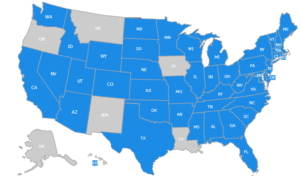
Psychologists who participate in PSYPACT, an interstate compact for telepsychology, can provide services to clients located in any of the many participating states without needing a separate license in each one. For a student who splits time between a home state and a school state, this means therapy can continue without a gap, rather than needing to restart with a new provider each semester.
Are college counseling centers a good place to start even if I might need more than they offer?
Often, yes. Counseling centers are well positioned for initial assessment, crisis support, and short-term work, and their clinicians are typically well informed about when a concern would benefit from a referral. Starting there and being referred onward, if needed, is a normal and often efficient path, not a wasted step.
- Inside Higher Ed. “Counseling Centers Triage Students by Mental Health Needs.” insidehighered.com
- Association for University and College Counseling Center Directors (AUCCCD). 2023-2024 Annual Survey Report. Summarized in Inside Higher Ed, “Counseling Center Demand on the Decline, Staffing Issues Remain” (March 11, 2025). insidehighered.com
- TimelyCare. Survey of CAPS Directors, December 2025. Summarized in “How Wait Times Impact the Health and Well-Being of College Students.” timelycare.com


 Alan Jacobson, Psy.D., MBA, is a licensed clinical psychologist and Director of the Foresight Psychological Institute.