Last Updated on June 21, 2026 by Dr. Alan Jacobson
As a psychologist who has delivered thousands of hours of telehealth, I no longer view virtual treatment as a substitute; it is a distinct modality with unique clinical advantages. In many cases, virtual work actually enhances treatment: clients engage from their real environments, exposures occur in vivo, executive functioning supports are built directly into daily routines, and emotionally charged patterns emerge naturally rather than being artificially contained within an office setting. I provide online OCD therapy, CBT online, ADHD therapy online, as well as virtual treatment for depression and anxiety. Entire techniques can be delivered this way; therefore, I include an example of schema therapy online later.
Benefits and Possibilities of Online Therapy
Telehealth has quietly transformed the landscape of mental health care. What began as a workaround has become a sophisticated, outcomes-driven model that expands both access and depth of treatment. When therapy moves into the client’s real environment, the work becomes more relevant, more immediate, and more sustainable.
One of the greatest advantages of online therapy is ecological validity—interventions are no longer practiced in a vacuum. Exposure work happens in real kitchens, dorm rooms, cars, and workplaces. Executive functioning strategies are embedded in physical calendars and living spaces. Emotional patterns emerge naturally, not in artificially controlled office settings.
Telehealth also increases continuity of care. Clients can maintain treatment despite relocations, busy life stages, medical limitations, or unpredictable schedules. Missed sessions decrease, engagement rises, and therapeutic momentum is preserved.
Equally important is the way telehealth reshapes the therapeutic relationship. Many clients report feeling safer opening up in familiar surroundings. Shame softens. Vulnerability deepens. Sessions become collaborative working meetings rather than formal appointments.
The possibilities extend far beyond convenience. Online therapy enables:
- Real-time in-vivo exposure coaching
- Integrated digital skill systems for ADHD and executive functioning
- Integrated technology for approaches such as Schema Therapy online
- Between-session micro-interventions that reinforce progress daily
- Precision monitoring of mood, stress, and behavioral patterns
- Collaboration with families, schools, and workplaces with ease
Telehealth is not a diluted version of care. It is a platform that allows treatment to occur where life unfolds—creating change that is not only meaningful in session but also durable in the world beyond it. Below are several core evidence-based models, each adapted for deep, sustainable change.
Online Therapy Case Examples
The following case examples were intentionally selected to illustrate not only the effectiveness of online therapy but also its extraordinary range. Together, they demonstrate how telehealth can support clients with diverse needs, diagnoses, life stages, and levels of complexity—from high-functioning professionals managing burnout to young adults navigating OCD to individuals carrying lifelong emotional patterns rooted in early experience.
These cases also highlight a point often overlooked in discussions of virtual care: online therapy is not a single technique. It is a platform that enables the delivery of many evidence-based models with precision, creativity, and real-world relevance. Schema, Exposure and Response Prevention, CBT, ADHD coaching, and panic-focused interventions all look different in practice—yet each can be implemented deeply and effectively through online therapy.
Perhaps most importantly, these stories show how treatment changes when it enters the client’s daily environment. Sessions are no longer confined to abstract conversations. They become working laboratories for emotional regulation, exposure, behavioral change, and identity repair. Clients do not merely talk about their lives—they practice living them differently, in real time.
The diversity of the cases below is intentional. They are meant to reflect the full spectrum of what online therapy can accomplish: deep emotional healing, behavioral transformation, restoration of functioning, and the rebuilding of confidence, agency, and meaning.
Schema Therapy Online Case Example
Clinical Focus
Schema treatment is ideal for individuals whose struggles are not limited to surface symptoms but involve deep-rooted emotional patterns—chronic shame, abandonment sensitivity, emotional deprivation, rigid perfectionism, or lifelong self-sabotage.
Schema Therapy Online Techniques
- Comprehensive schema and mode mapping using digital inventories
- Development of individualized schema profiles
- Guided imagery rescripting with recorded audio for between-session use
- Chair dialogues via screen partitioning and role switching
- Schema flashcards and coping statements delivered digitally
- Emotional needs tracking logs
- Secure attachment modeling through consistent therapeutic responsiveness
- Re-parenting techniques adapted for online therapy
- Behavioral pattern-breaking assignments
- Relational rupture repair processing
Schema Therapy Online Outcomes
- Reduced emotional reactivity during interpersonal stress
- Increased tolerance for closeness and vulnerability
- Softened punitive internal dialogue
- Improved emotion regulation
- Increased stability in romantic and professional relationships
- Decreased relapse into maladaptive coping modes
- Greater self-compassion and internal coherence
- Sustained symptom improvement in chronic conditions
Schema Therapy Online Case Example
Presenting Concerns
Lena, age 34, sought treatment after a sudden breakup that left her emotionally destabilized and unable to focus at work. She described escalating jealousy, emotional withdrawal, and overwhelming fear of being left — even when her partners showed consistency.
Assessment Phase
- Young Schema Questionnaire administered digitally
- Life-timeline mapping using a shared whiteboard
- Mode inventory identifying:
- Vulnerable Child
- Detached Protector
- Punitive Parent
- Underdeveloped Healthy Adult
Schema Therapy Online Interventions
- Imagery Rescripting: Live guided imagery revisiting childhood experiences of emotional unpredictability. A benefit of schema therapy online was the use of recorded audio sessions for daily playback.
- Chair Dialogues via Video: Screen partition used to visually separate “Punitive Parent” and “Healthy Adult” perspectives.
- Schema Therapy Online Flashcards: Digital prompts used between sessions when abandonment schema activated.
- Attachment Repair: I intentionally modeled secure emotional responsiveness.
Process & Breakthrough
At week 9, Lena experienced a rupture after a perceived cancellation from her therapist, triggering intense shame. Processing this rupture in-session became a pivotal corrective emotional experience.
Schema Therapy Online Outcome
By month five of schema therapy online, Lena no longer interpreted delayed responses as rejection and maintained stable intimacy in a new relationship.
Online OCD Therapy
Clinical Focus
Online OCD Therapy using the Exposure and Response Prevention approach is potent because exposures occur in the client’s real-world environment—where symptoms actually live.
Online OCD Therapy (Using ERP)
Online OCD Therapy Techniques
- Detailed ritual tracking logs
- In-home exposure coaching via video
- Fear hierarchy construction and revision
- Response-prevention accountability contracts
- Real-time therapist modeling of uncertainty tolerance
- Threat probability recalibration exercises
- Family accommodation reduction plans
- Relapse-prevention scripting
- Daily self-monitoring dashboards
- Cognitive defusion around intrusive thoughts
Online OCD Therapy Outcomes
- Significant reduction in ritual behaviors
- Improved distress tolerance
- Increased functional independence
- Restoration of academic and occupational performance
- Reduced reliance on reassurance seeking
- Improved confidence in managing uncertainty
- Long-term maintenance of treatment gains
Online OCD Therapy Case Example
Presenting Concerns
Michael was showering multiple times daily, wiping down electronics, and missing classes due to contamination concerns.
Online OCD Therapy Assessment Phase
- Y-BOCS administered via secure portal
- Ritual mapping using screen-shared diagrams
- Family accommodation audit
Online OCD Therapy Interventions
- In vivo ERP: I coached exposures in a dormitory environment.
- Response Prevention Contracts: Online OCD therapy enabled weekly digital commitments.
- Threat Probability Recalibration: Spreadsheet tracking feared outcomes.
- Relapse Prevention Training: “What if I relapse?” exposure scripts.
Process & Breakthrough
At week 6, Michael attempted to ritualize off-camera secretly. Processing this avoidance strengthened his accountability and insight.
Online OCD Therapy Outcome
Rituals reduced by 85%, academic functioning restored, and he was no longer reliant on family reassurance.
CBT Online
Clinical Focus
CBT online targets the core cognitive distortions that sustain depression, burnout, and low self-esteem.
Techniques for CBT Online
- Live thought record completion
- Cognitive distortions mapping
- Behavioral activation scheduling
- Values-driven goal setting
- Behavioral experiments
- Core belief restructuring
- Problem-solving skills training
- Sleep hygiene and routine planning
- Stress inoculation exercises
- Digital mood tracking
CBT Online Outcomes
- Decreased depressive symptom severity
- Improved emotional insight
- Increased behavioral engagement
- Greater cognitive flexibility
- Improved work-life balance
- Sustained mood stability
- Reduced rumination
CBT Online Case Example
Presenting Concerns
Sara experienced emotional numbness, insomnia, and constant guilt.
CBT Online Assessment Phase
- PHQ-9, GAD-7
- Core belief mapping using cognitive triangle models. CBT online allowed for a visible, printable map.
CBT Online Interventions
- Cognitive Restructuring: Live reframing of automatic thoughts.
- Behavioral Experiments: Testing predictions such as “If I rest, I fail.”
- Values Clarification and Activation: Reintroducing meaning-based routines.
- Sleep Hygiene Protocols
Process & Breakthrough
Sara disclosed fear that slowing down meant “being lazy like my mother.” Reframing this core belief was transformative.
CBT Online Outcome
As a result of CBT online, PHQ-9 decreased from 17 to 4; motivation and emotional vitality were restored.
ADHD Therapy Online
Clinical Focus
ADHD therapy online centers on executive functioning, emotion regulation, and sustained structure.
ADHD therapy online techniques
- Executive functioning audits
- Task chunking and prioritization frameworks
- Digital calendar and reminder system integration
- Visual time-blocking strategies
- Emotional regulation coaching
- Failure-recovery protocols
- Environmental optimization walkthroughs
- Weekly productivity dashboards
- Accountability check-ins
- Shame-resilience training
ADHD Therapy Online Outcomes
- Increased task completion
- Reduced procrastination cycles
- Improved self-confidence
- Enhanced emotional self-regulation
- Strengthened organizational skills
- Greater occupational reliability
- Sustainable productivity routines
ADHD Therapy Online Case Example
Presenting Concerns
At work, Jason was experiencing missed deadlines, emotional flooding, and intense shame.
ADHD Therapy Online Assessment Phase
- BAARS-IV
- Executive functioning mapping across daily routine
ADHD Therapy Online Interventions
- Micro-Task Chunking (a cornerstone of ADHD therapy online)
- Visual Timer Training
- Emotion Labeling Scripts
- Failure Recovery Protocols
- Digital Accountability Loops
Process & Breakthrough
Jason began openly naming shame rather than dissociating—this facilitated consistent follow-through.
ADHD Therapy Online Outcome
After just six sessions of ADHD therapy online, deadline compliance increased from 40% → 92% in 10 weeks, reducing stress and shame and improving his mood and outlook.
Teletherapy for Anxiety and Depression
Clinical Focus
This model treats generalized anxiety, panic disorder, and phobic avoidance.
Expanded Techniques
- Interoceptive exposure training
- Worry postponement exercises
- Catastrophic prediction testing
- Cognitive defusion techniques
- Graduated fear hierarchies
- In-vivo exposure assignments
- Mindfulness-based attention retraining
- Panic response scripts
- Thought-challenging worksheets
- Relapse-prevention planning
Expanded Outcomes
- Decreased frequency and intensity of panic attacks
- Reduced avoidance behaviors
- Increased tolerance for uncertainty
- Improved daily functioning
- Restoration of independence
- Enhanced confidence in emotional resilience
- Long-term anxiety management skills
Case Example: Emily – Panic Disorder
Presenting Concerns
Fear of fainting while driving; complete driving avoidance.
Assessment Phase
- Panic Disorder Severity Scale
- Catastrophic misinterpretation inventory
Interventions
- Interoceptive Exposure: Breath-holding, dizziness induction.
- Behavioral Experiments: Testing fainting predictions.
- Cognitive Defusion: “Thoughts are weather, not facts.”
- Graduated Driving Hierarchy
Process & Breakthrough
During session 7, Emily experienced a full panic attack — and stayed present. That moment ended her fear of panic itself.
Outcome
Driving resumed independently within 8 weeks; panic no longer governed daily choices.
These are not “virtual conversations.”
They are structured, transformational clinical interventions delivered where life actually happens — and that’s what makes them so powerful.
Emerging Innovations in Therapy Online
- Integration of AI-Assisted Support Tools
- Chatbots for between-session check-ins and mood tracking
- Automated cognitive restructuring prompts
- Early risk detection and adaptive support between clinician contacts
- Virtual Reality (VR) Exposure Therapy
- Immersive environments for phobia and PTSD treatment
- Safe, controlled, graded exposures beyond what video alone can provide
- Evidence for anxiety and social anxiety improvement
- Augmented Reality (AR) Skill Practice
- AR overlays to practice emotional regulation in real-world contexts
- On-site cognitive reframing prompts during daily triggers
- Real-time CBT prompts delivered at emotional tipping points
- Context-sensitive feedback tied to behavior patterns and timing
- Gamified Therapeutic Platforms
- Digital Phenotyping and Passive Data Analytics
- Behavioral pattern detection using phone usage, sleep, and movement
- Clinician dashboards that highlight emerging risk trends
- Asynchronous Video Exposure Practice
- Clients record exposures or skills for therapist review
- Efficient use of synchronous time for feedback and personalization
- Integration with Health Ecosystems
- Collaboration with primary care and psychiatry via shared digital platforms
- Seamless tracking of medication, treatment progress, and functional outcomes
- Group Telehealth Enhancements
- Breakout skill labs within group sessions
- Peer support with clinician-led structured modules
Benefits of Therapy Online
Clients benefit from a model that blends:
- Evidence-based clinical methods
- Executive functioning and performance coaching
- Values-based and meaning-centered frameworks
- Forward-looking planning that extends beyond symptom relief
The result is not just improvement, but momentum. Online therapy in my practice is designed to help people reclaim agency, rebuild confidence, and move toward lives that feel aligned rather than merely managed. It is treatment that meets people where they are—and helps them move intentionally toward where they want to be.
Telehealth is no longer a contingency plan—it is a clinically rich, outcomes-driven platform capable of delivering deep emotional healing, behavioral change, and long-term growth. When therapy meets clients where life actually happens, transformation becomes not only possible—but sustainable. If you have any questions or would like to learn more about finding the best online therapy options for you, please feel free to contact me or schedule a consultation anytime.
You may be balancing a lot right now: work, family, school, health, finances, motivation, anxiety—sometimes all at once. Finding a therapist can feel like another task on an already full plate. The good news is that online counseling services (telehealth) have matured into a genuinely strong option for many people—and in the right setup, it can be as effective as in-person, with a few unique advantages that are hard to replicate in an office. This guide to finding the best online therapy is designed to help you understand which top telehealth mental health options are available, how to spot high-quality care, the approaches you might encounter, and what results you can reasonably expect from seeing a therapist or psychologist online—plus real-world case examples to make it tangible.

The following is a basic overview of finding and participating in the best online therapy fit for your specific needs
Why Telehealth Mental Health Can Be Better Than In-Person
The best online therapy isn’t “second best.” For many people, it’s the best fit—period. Here’s why.
1) The best online therapy options remove friction—and friction is the enemy of follow-through
No commute, parking hassles, waiting rooms, or scrambling to leave work early. When therapy is easier to attend, people tend to attend more consistently, and consistency matters.
2) Telehealth mental health allows you to access specialists you couldn’t reach otherwise
In-person therapy is constrained by geography. Telehealth mental health treatment opens access to clinicians with specific expertise (e.g., trauma, OCD, ADHD, panic, chronic illness adjustment, relationship work, executive functioning, autism-related social stress, grief, or high-stress professions), even if your town doesn’t have them.
3) You get help in the environment where life actually happens
A big perk: therapy can happen in your real-life context. That can make skills more “sticky.” You can practice grounding in the room where anxiety shows up. You can build routines where you actually live. You can even do exposure work or habit-building more naturally with a clinician’s guidance.
4) The best online therapy can feel safer and more private
Many people open up more quickly at home. For some, walking into a clinic can be emotionally taxing. Telehealth mental health treatment reduces that barrier—especially for teens, people with social anxiety, trauma histories, chronic pain, or fatigue.
5) It’s easier to integrate with modern schedules
For parents, students, professionals who travel, or people with unpredictable weeks, telehealth mental health makes therapy more doable long-term—without the “I can’t keep this up” feeling.
6) It often supports continuity during transitions
Moving? Traveling? Starting college? Switching jobs? Telehealth mental health care can maintain continuity of care (subject to licensing rules), reducing relapse risk and sustaining momentum.
Best Online Therapy Options
When people search “best online therapy,” they’re often talking about one of these:
Option A: Private-practice telehealth therapy (often the highest customization)
- You choose a specific clinician (clinical psychologist, therapist, psychiatrist, etc.)
- Usually offers the most individualized care
- Best when you want a true specialist, higher complexity, or tailored work
Option B: Group-practice telehealth
- Multiple clinicians under one practice
- Often faster matching, more availability, sometimes insurance-friendly
- Great if you want options and flexibility
Option C: Large therapy platforms/marketplaces
- Fast onboarding, large provider lists, and sometimes lower cost
- Quality can vary widely, as can clinician experience
- Best when access is the biggest barrier, and you’re prepared to “screen” actively
Option D: Coaching + therapy hybrid ecosystems (use thoughtfully)
- Some people pair therapy with skills coaching, executive functioning coaching, or structured programs
- Works well when online therapy goals include routines, performance, accountability, and behavior change
- Keep boundaries clear: coaching isn’t therapy, and it doesn’t replace clinical care for diagnoses or significant symptoms
Results You Can Expect from the Best Online Therapy
The most realistic, empowering expectation is this: even the best online therapy doesn’t erase your life stressors—it upgrades your capacity to handle them.
Common outcomes people report when therapy is a good match:
- Less anxiety intensity and shorter recovery time
- Better sleep consistency and fewer “spirals” at night
- Improved emotional regulation (you feel feelings without getting hijacked)
- Clearer self-understanding and less shame
- Stronger boundaries and more effective communication
- More follow-through and less avoidance
- Better focus and energy management
- Improved relationships (less reactivity, more repair)
- A workable plan for recurring triggers and setbacks
A subtle but huge win: you stop measuring life by “Do I feel perfect today?” and start measuring by “Can I function, connect, and keep moving?”
What It’s Like to See a Psychologist Online
If you’ve never seen a therapist or psychologist online, here’s what it typically looks like:
Before you see the psychologist online
- Complete intake forms and consent documents
- Possibly fill out brief questionnaires (e.g., anxiety/depression scales)
- Test your camera/mic and choose a private spacessibly
During the session
- It’s usually video-based on a secure platform
- The psychologist may take notes, share a screen, use worksheets, or teach skills
- Sessions are typically 45–55 minutes (sometimes longer for certain models)
Privacy and setup tips that actually matter
- Use headphones if possible
- Sit facing a door if that helps you relax
- Put your phone on Do Not Disturb
- If home isn’t private, consider a parked car, a quiet office, or a private room during a low-traffic time
Methods a Psychologist Online May Use (and What They’re Good For)
Most high-quality telehealth mental health care is the same evidence-based therapy you’d get in an office—just delivered through video (and sometimes phone/text adjuncts). A psychologist online has access to the same strategies as those who practice in person, including:
CBT (Cognitive Behavioral Therapy)
Great for anxiety, depression, insomnia (using CBT-I), panic, stress management, perfectionism, and performance anxiety.
ACT (Acceptance and Commitment Therapy)
Helps with overthinking, avoidance, chronic stress, meaning/values work, and “I know what to do but I can’t do it.”
DBT Skills (Dialectical Behavior Therapy)
Powerful for emotional dysregulation, impulsivity, relationship intensity, self-harm urges, and distress tolerance.
ERP (Exposure and Response Prevention)
Gold standard for OCD and certain anxiety patterns. Can work very well via online therapy.
Trauma-Focused Approaches (e.g., CPT, EMDR, TF-CBT)
Used for PTSD/trauma-related symptoms, triggers, nightmares, avoidance, shame, hypervigilance.
Mindfulness-Based Work
Excellent for rumination, stress physiology, sleep, pain management, and attentional control.
Executive Function / Skills-Based Therapy
Especially helpful for ADHD, student overwhelm, procrastination cycles, time management, and burnout prevention.
Couples Therapy (e.g., Gottman-informed, EFT-informed)
Couples Telehealth can be surprisingly effective—often easier logistically and less emotionally “intimidating” than an office.
Online Counseling Services: More Case Examples
The following three examples are designed to give you a well-rounded view of the type of care you can expect to receive from online counseling services:
Online Counseling Services for a Teen with Social Anxiety + School Avoidance + Family Stress
Presenting concern: A 15-year-old started avoiding school after a humiliating social incident. Panic symptoms spiked in the morning; grades dropped; family conflict escalated.
Why Online Counseling Services helped:
- The teen was more willing to start therapy online from home (lower barrier, less shame)
- The psychologist could coach parent-teen communication in real time—in the home environment
- Skills practice happened where anxiety was occurring (bedroom, morning routine)
Methods used:
- CBT for social anxiety (thought traps, cognitive restructuring)
- Exposure planning (gradual school re-entry steps)
- Parent coaching (reinforcement patterns, conflict de-escalation scripts)
- Sleep routine adjustments + morning panic plan
Expected results:
Over weeks, morning panic became more manageable, school attendance increased stepwise, and the family shifted from “arguing about attendance” to “teaming up against anxiety.” The teen gained confidence through small wins that compounded.
Online Counseling Services for a College Student with ADHD + Overwhelm + Sleep Dysregulation
Presenting concern: A 19-year-old college student had a strong ability but inconsistent performance. Late-night scrolling, missed deadlines, and shame spirals created a cycle of avoidance.
Why Online Counseling Services helped:
- Scheduling was easier around classes and changing routines
- Therapy could be integrated into weekly planning in real time (calendar, portals, assignments)
- The clinician could help the student build systems on the actual devices they use
Methods used:
- Executive functioning coaching within therapy (task initiation, prioritization, time blocking)
- CBT for perfectionism and shame-based avoidance
- Behavioral activation (structure + reward)
- Sleep stabilization plan (wind-down routine, stimulus control)
Expected results:
Within a semester, the student shifted from “reactive and drowning” to “predictable and sustainable.” The biggest change wasn’t becoming a productivity robot—it was building a repeatable routine that reduced panic and preserved self-esteem.
Online Counseling Services for an Adult with Burnout + Anxiety + Relationship Strain
Presenting concern: A 37-year-old professional was high-performing but exhausted, irritable, and increasingly disconnected at home. Sleep was fragmented; weekends felt like recovery-only.
Why Online Counseling Services helped:
- Reduced time burden made therapy sustainable (no commute = less friction)
- Sessions could happen during lunch breaks or travel weeks
- The psychologist could help the client audit real-life stressors and boundaries in context (work calendar, emails, daily schedule)
Methods used:
- ACT (values-based decision-making and boundary alignment)
- CBT skills for rumination and worry loops
- Stress physiology skills (breathing, downshifting, micro-recovery)
- Couples’ communication tools (repair attempts, “slow the conflict” scripts)
Expected results:
Burnout symptoms decreased, sleep improved, and home communication became less reactive. The client learned to prevent the “pressure cooker” cycle rather than just recovering after it exploded.
Conclusion and My Work
The best online therapy has reached the point where it’s not just a convenient substitute—it’s a powerful format that can make high-quality care more accessible, more consistent, and more integrated into real life. The “best” online counseling services aren’t about a flashy platform or perfect buzzwords—it’s about finding a clinician who is skilled, experienced with your specific concerns, and intentional about helping you build measurable change.
If you’re considering starting, you don’t need to have the perfect plan. You just need the next step: identify what you want help with, book a consult, and begin. Momentum starts small—and then it starts to stack. I work as a psychologist online, and whether or not you would like to see me for treatment, I’d be happy to answer any questions you have about telehealth mental health. Please feel free to contact me or schedule a consultation anytime.
Frequently Asked Questions: Online Therapy
Common questions about how online therapy works, who it helps, and what to expect from virtual treatment.
Is online therapy as effective as in-person therapy?
Yes — and in some respects it can be more effective. A large and growing body of research supports the clinical equivalence of telehealth and in-person treatment across a wide range of conditions, including anxiety, depression, OCD, ADHD, and trauma. Beyond equivalence, online therapy offers a clinically meaningful advantage called ecological validity: interventions happen in the client’s real environment — their home, dorm, office, or car — rather than in a neutral office setting. Exposures occur in vivo, executive functioning supports are built directly into daily routines, and emotional patterns emerge naturally. This often accelerates and deepens the work.
What conditions and approaches can be treated effectively online?
Online therapy supports the full range of evidence-based treatment models. Dr. Jacobson delivers CBT online for depression and anxiety, Exposure and Response Prevention (ERP) for OCD, Schema Therapy for deep-rooted emotional patterns, ADHD therapy and coaching, panic-focused treatment, and integrated treatment for depression and anxiety. Telehealth is not a reduced version of these approaches — it is a platform that enables their full delivery, often with greater real-world relevance and between-session integration than office-based work alone.
What are the practical advantages of doing therapy online?
Beyond clinical effectiveness, online therapy offers significant practical benefits. It eliminates commute time, removes geographic barriers, and makes it far easier to maintain consistent attendance — one of the strongest predictors of good treatment outcomes. It supports continuity of care during relocations, travel, illness, or demanding life stages. Many clients also report feeling more comfortable opening up in their own environment — shame softens, and sessions take on a collaborative, working-meeting quality rather than a formal clinical one. For students, the ability to continue therapy between semesters without interruption is particularly valuable.
Can complex treatments like Schema Therapy or ERP really be done via video?
Yes — and the case examples on this page illustrate exactly how. Schema Therapy online uses digital inventories, shared whiteboard life-timeline mapping, screen-partitioned chair dialogues between schema modes, guided imagery rescripting with recorded audio for daily playback, and digital schema flashcards. ERP for OCD is delivered via in-home exposure coaching over video — which is actually a clinical advantage, since contamination and other OCD triggers live in the home environment, not in a therapist’s office. Complex treatment is not just possible online; the format often makes it more precise and contextually relevant than office-based delivery.
Can I see Dr. Jacobson online if I live in a different state?
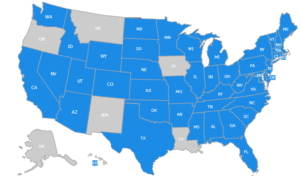
In most cases, yes. Dr. Jacobson is a PSYPACT-participating psychologist licensed to practice in 44 states. This means clients can begin therapy in one location and continue without interruption if they relocate, travel, or split time between states. It also makes Dr. Jacobson accessible to clients in states where specialized services — such as OCD therapy, fear of flying treatment, or sports psychology — may not be readily available locally. A full list of covered states is available on the locations page.
How is an online therapy session actually structured?
Sessions follow the same clinical structure as in-person appointments — typically 45–55 minutes — with the addition of tools that enhance the virtual format. These include screen sharing for live completion of thought records, cognitive maps, or planning documents; shared digital workspaces for between-session skill tracking; and, where clinically indicated, real-time in-vivo coaching during exposures or behavioral experiments. Session recordings (with consent) allow clients to revisit key interventions. The goal is not to replicate the office experience online but to build a richer, more embedded form of treatment that meets clients where their lives actually unfold.
What’s the difference between online therapy and apps or AI-based mental health tools?
Online therapy with a licensed psychologist is clinical treatment — individualized, diagnostically informed, and delivered by a credentialed professional with ethical and legal accountability. Apps and AI-based tools can be useful adjuncts for mood tracking, psychoeducation, and between-session skill reinforcement, and they represent an exciting area of emerging innovation in telehealth. However, they are not substitutes for clinical assessment, diagnosis, or the therapeutic relationship that drives meaningful and lasting change. Dr. Jacobson’s practice integrates evidence-based digital tools where appropriate while keeping the clinical relationship at the center of care. For more on emerging innovations, see the best online therapy guide.
How do I know if online therapy is the right fit for me?
The best way to find out is through a free 20-minute consultation. In that conversation, Dr. Jacobson will ask about what you’re experiencing, what approaches you may have tried, and what your goals are — and you’ll get a candid sense of whether online therapy, and this particular fit, makes sense. Most people find the conversation more straightforward than they expected. You can also explore the guide to choosing a therapy approach and the virtual therapy guide for more context before reaching out.
Ready to get started with online therapy?
Schedule a free 20-minute consultation with Dr. Jacobson. No commitment required — just an honest conversation about where you are and what might help.
Schedule a Free Consultation